MICE Market Demand & Segmentation
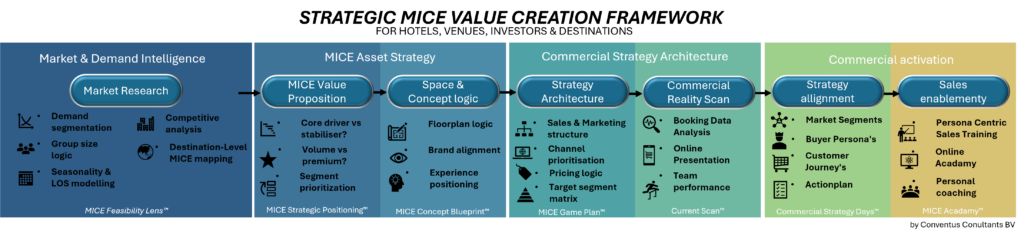
Effective MICE strategy starts with understanding how the meetings market actually functions. Demand for meetings, conferences and events is shaped by a complex mix of segment dynamics, group size patterns, lead times and competitive supply.
Conventus helps venues, hotel groups, investors and destinations translate this complexity into clear market insight. By combining quantitative data with qualitative market knowledge, we identify where demand originates, how it behaves and where the strategic opportunities lie.
What we analyse
→ Demand segmentation
Understanding the different segments within the meetings market, from corporate meetings to association conferences and incentive events.
→ Group size and frequency patterns
Analysing how group sizes, meeting frequency and length of stay influence venue utilisation and revenue potential.
→ Competitive supply landscape
Mapping competing venues, hotel meeting facilities and convention centres to understand positioning and market gaps.
→ Market geography and feeder markets
Identifying the key geographic markets and industries that generate meeting demand.
→ Booking behaviour and lead times
Understanding how far in advance meetings are booked and how this impacts commercial strategy.
→ Destination logistics and positioning
Evaluating accessibility, infrastructure, accommodation capacity and the unique benefits that make a destination attractive for meetings and conferences.
Key strategic questions
→ Where does meeting and conference demand originate geographically and by industry?
→ Which meeting segments generate the strongest and most sustainable demand?
→ What group sizes and meeting formats dominate the market?
→ How does competitive supply influence positioning opportunities?
→ How do booking patterns, lead times and seasonality shape demand?
→ How do destination logistics, accessibility and local benefits influence event attractiveness?
Strategic outcome
The result is a clear picture of how the meetings & events market functions and where the strongest opportunities lie. This insight forms the foundation for defining the right positioning, concept and commercial strategy in the next step: MICE Asset Strategy.